Scissor Lift Safety Checklist Before Every Operation
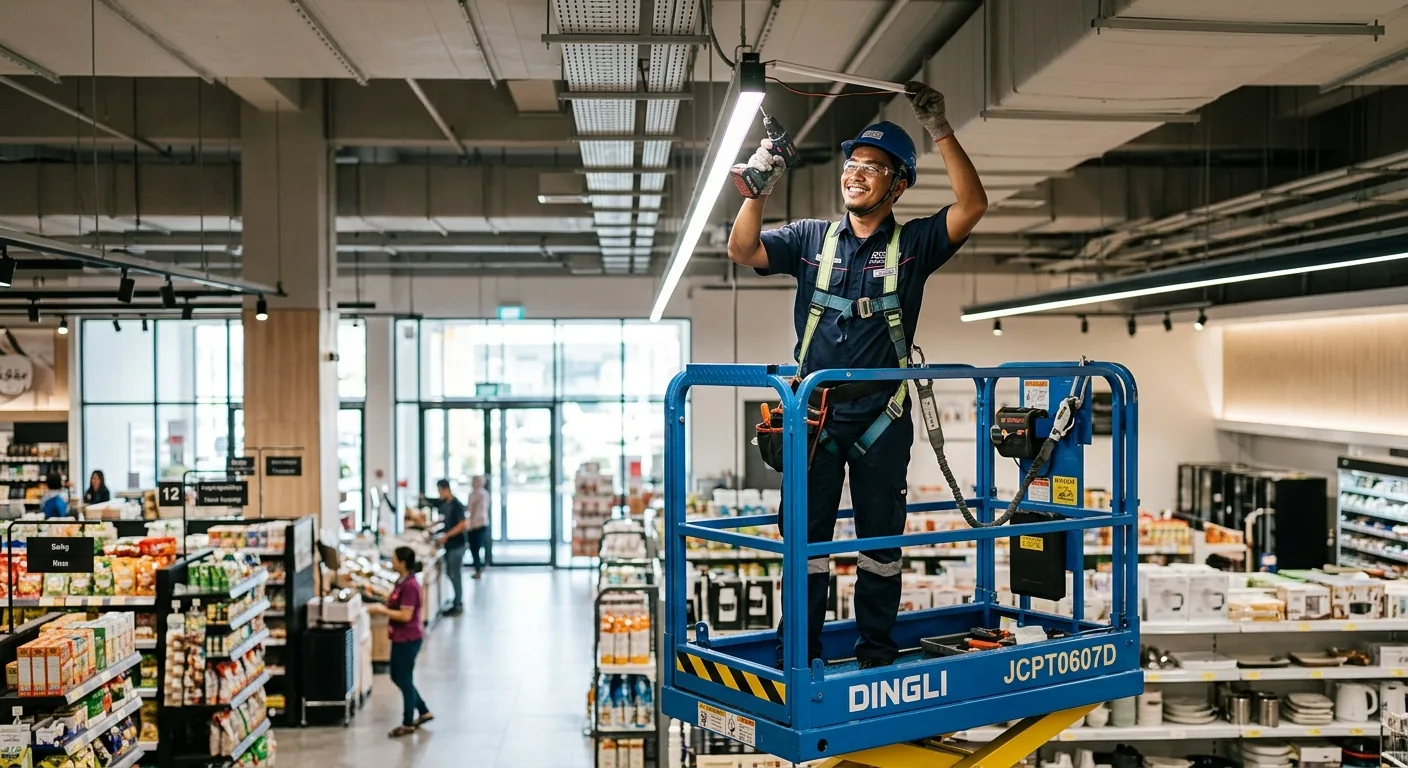
Most accidents involving machines at height can be prevented with a short check before work begins. The problem is that when the schedule is tight, this is the step most easily skipped.
This checklist is designed to be used on site before every shift. It covers machine checks, site conditions, weather and practice on the platform. Print it or keep it on your team's phones for easy reference.
Check the Paperwork Before Use
Before touching the controls, make sure the machine's paperwork is complete. This matters most on the first day the machine arrives on site.
- A valid JKKP/DOSH PMA certificate with a serial number matching the machine.
- Clear load limit and maximum height labels on the platform.
- An operating manual or quick guide kept with the machine.
- The names of operators authorised to run the machine that day.
All our units carry a valid PMA certificate and are insured. For more detail, read JKKP PMA certificates for scissor lifts.
Machine Inspection Before the Shift
Do this inspection with the platform fully lowered. If you find any problem, do not use the machine and contact the rental company.
Structure and Platform
- Platform guardrails complete and solid, with the entry gate closing properly.
- No cracks, hydraulic oil leaks or bent parts on the scissor frame.
- Platform floor clear of oil, mud or slippery debris.
Controls and Emergency Systems
- Emergency stop buttons work on the platform and at ground level.
- Raise, lower and drive controls respond smoothly.
- Motion and tilt alarms sound as normal.
- Workers on the ground can locate the manual emergency lowering system.
Tyres, Battery and Fuel
Check tyres for damage or embedded objects. For electric units, make sure the battery has enough charge for the shift. For diesel units, check the fuel level and look for leaks around the engine.
Check the Work Site
A perfect machine can still tip over if it is placed in the wrong spot. Take a few minutes to walk around the work area.
- Surface: level, firm and able to carry the machine's weight. Avoid soft ground, holes and drain covers.
- Slopes: never raise the platform on a slope beyond the manufacturer's limit.
- Overhead hazards: beams, pipes, sprinklers and especially overhead power lines.
- Edges and level changes: keep the machine away from floor edges, ramps and loading docks.
- Traffic: cordon off the work area from forklifts, vehicles and pedestrians.
If your site is outdoors on uneven ground, make sure you are using the right unit. Read electric vs diesel scissor lifts for guidance.
Weather Considerations for Outdoor Work
In Malaysia the weather can turn quickly. Afternoon storms, strong wind and heavy rain are real risks for work at height outdoors.
Wind
A raised platform is more exposed to wind. Follow the manufacturer's wind limit and lower the platform immediately if the wind picks up.
Lightning and Rain
Stop work and lower the platform at the first sign of a thunderstorm. After rain, recheck the ground, because a wet surface can turn soft and unstable.
Safe Practice on the Platform
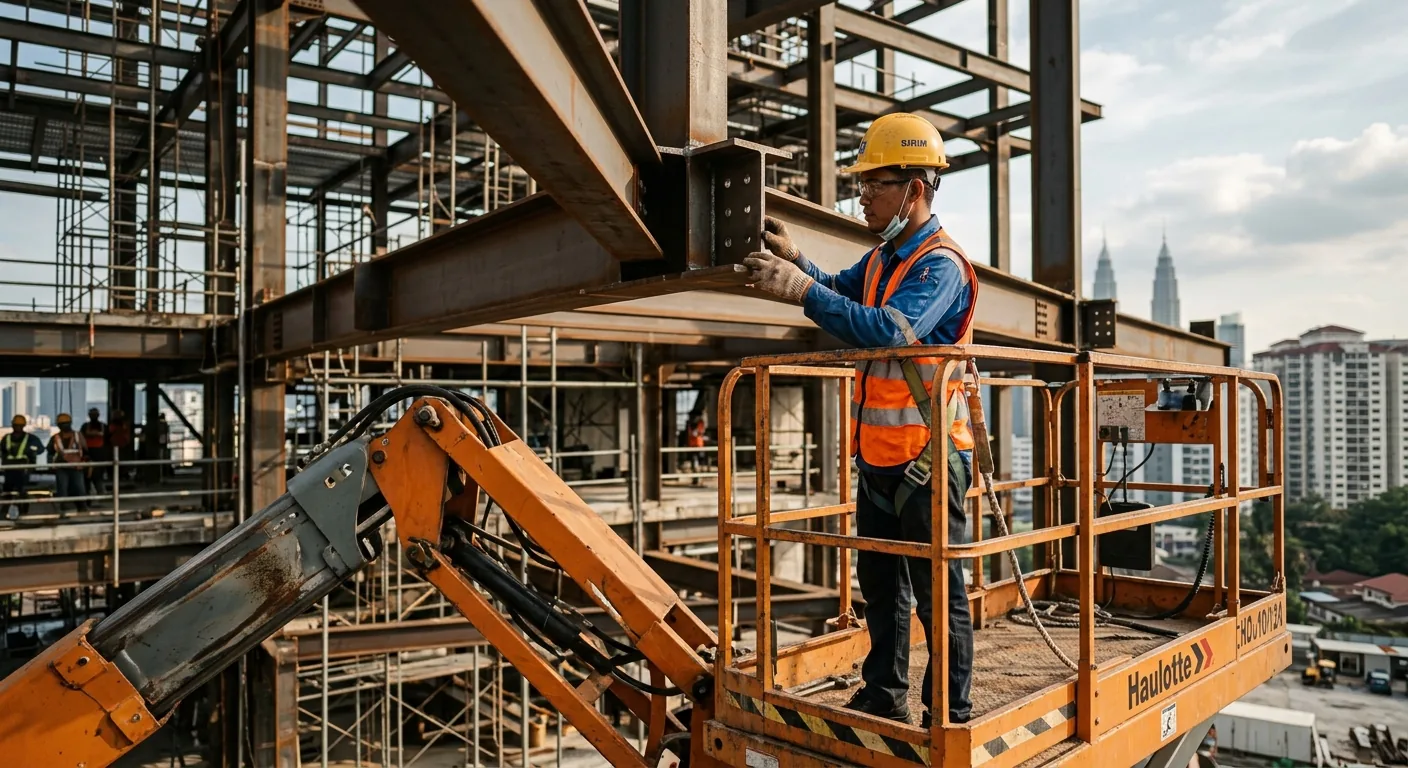
Once the platform is raised, safety depends entirely on how the workers behave. Make sure everyone on the platform understands these basic rules.
- Always stand on the platform floor. Never climb or sit on the guardrails.
- Never place a ladder, box or stool on the platform to reach higher.
- Respect the load limit: 230 kg for the Mini, 350 kg for the Standard and 450 kg for the Heavy Duty Diesel.
- Spread the load evenly and never hang heavy materials outside the guardrails.
- Tether tools or keep them in containers so nothing falls on people below.
- Drive the machine with the platform lowered unless the manufacturer allows otherwise.
If the height is not enough, do not improvise. Pick a taller unit with the help of our guide on how to choose scissor lift height.
Common Mistakes Seen on Site
Even with a checklist in place, some mistakes keep happening. Spot them and avoid them from the start.
- Inspecting the machine only on the first day rather than every shift.
- Moving the cones out of the way for convenience, then forgetting to put them back.
- Carrying more than the load limit because it is "just one trip up".
- Using a phone while driving the machine with the platform raised.
After the Work Is Done
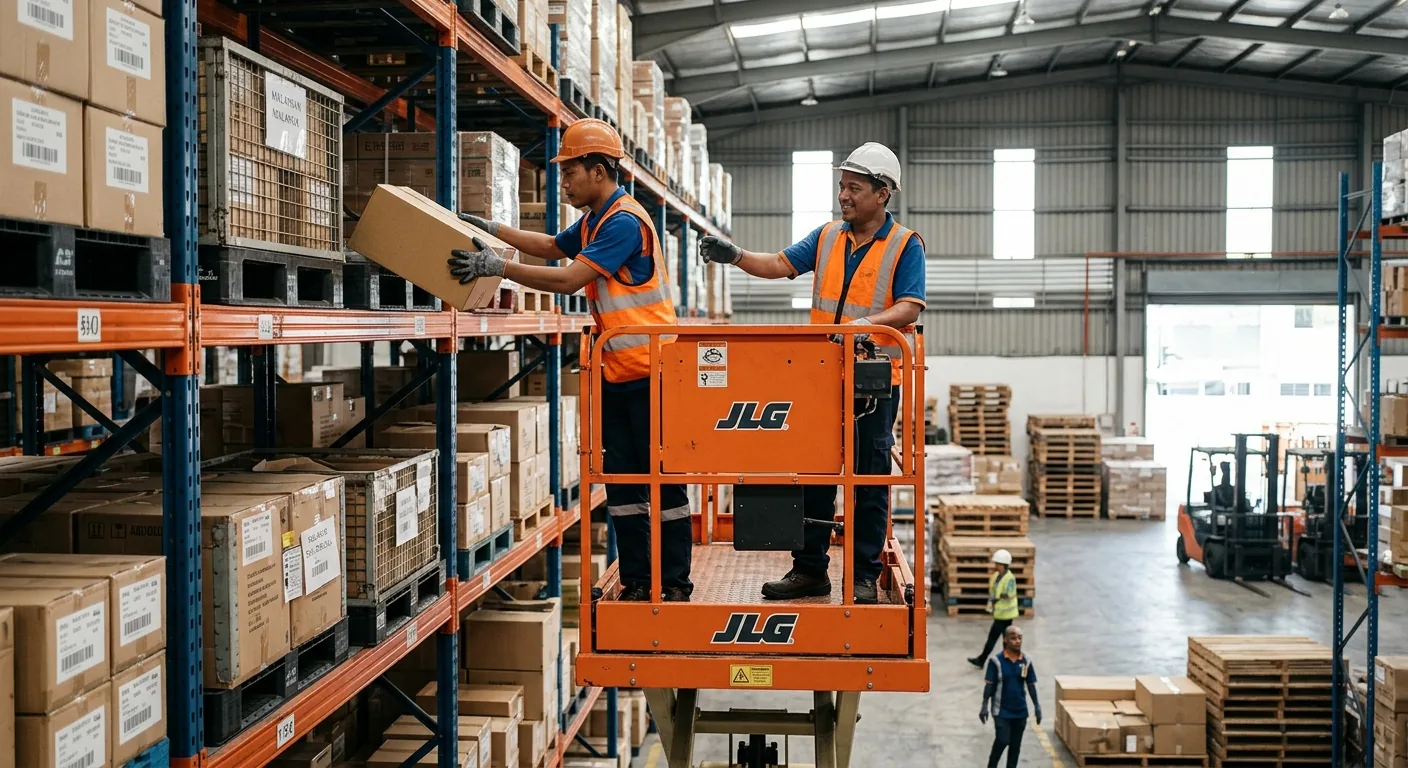
Safety does not end when the job is finished. Lower the platform fully, park the machine on level, safe ground, switch off the power and keep the key in its designated place.
For electric units, plug in the charger if the hire continues the next day. Report any fault or unusual noise to the rental company straight away, even if it seems minor.
The Role of Training and Operators
A checklist only works if the person using it understands what they are checking. Make sure every operator has received suitable training before running the machine.
If your team lacks experience, a trained operator is available from RM150 per day. Read the full guide in scissor lift operators and site preparation.
Frequently Asked Questions
How often should inspections be done?
At least once before every shift, and again after the machine moves to a different work area or after heavy rain.
Who should carry out the inspection?
The operator who will run the machine that shift, supported by the site supervisor or safety officer.
What should I do if the tilt alarm sounds?
Stop moving, lower the platform slowly and check the surface beneath the machine before continuing.
See all our certified units on the homepage.
Need an inspected unit or a trained operator for your project? WhatsApp us with your site details and work dates for a quote.
Need a scissor lift for your project?
WhatsApp us the job type, height and location — get a quote within 15 minutes.
Get a Quote