Electric vs Diesel Scissor Lift: Which One Fits Your Project?
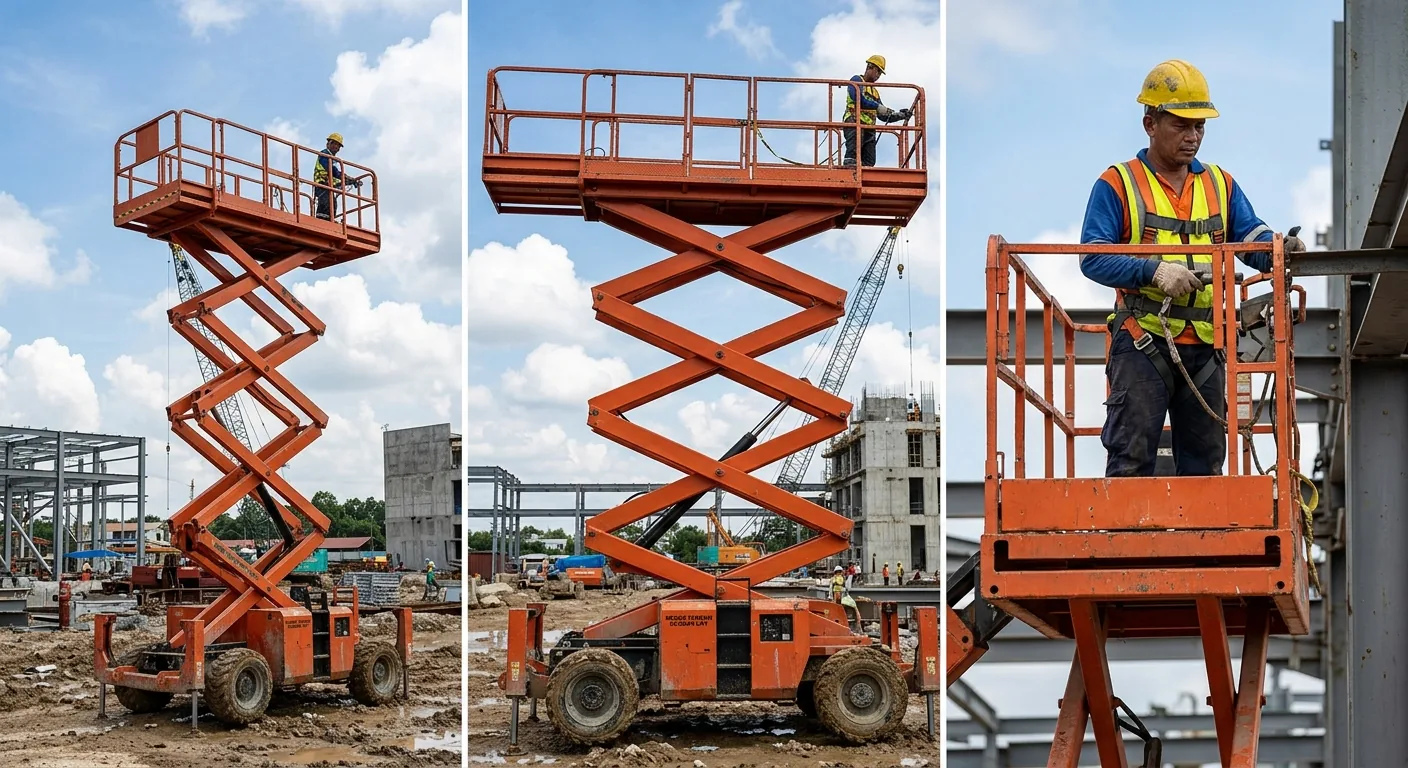
When you rent a scissor lift, the first decision is the engine type. An electric scissor lift and a diesel scissor lift look similar from a distance, but they are built for very different working environments.
Choosing the wrong one can mean the machine cannot get on site, damages the floor or breaks building rules. This article explains the key differences so you can choose with confidence.
The Basic Differences Between Electric and Diesel
Electric units run on rechargeable batteries and produce no fumes. Diesel units use a combustion engine, usually with four-wheel drive and larger tyres for rough surfaces.
Specification Summary
- Mini Electric: 6–8 m height, 230 kg load, for warehouses, offices and hotels.
- Standard Electric: 10–15 m height, 350 kg load, for malls, factories and convention centres.
- Diesel Rough-Terrain 4WD: 8–18 m height, for uneven ground and outdoor work.
- Heavy Duty Diesel: 15–20 m height, 450 kg load, for construction and infrastructure.
When to Choose an Electric Scissor Lift
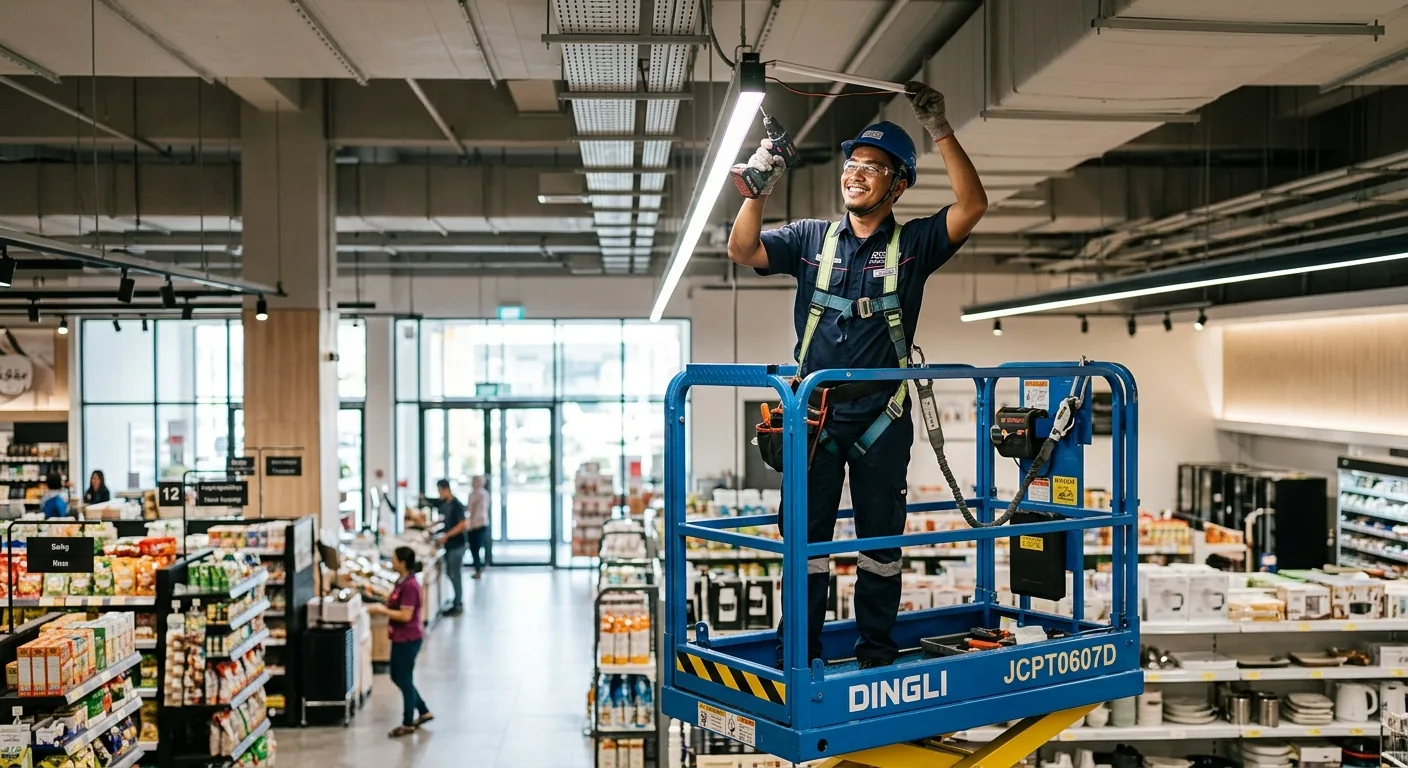
Choose an electric unit when the work is indoors or in an area with people around. No exhaust fumes means the air stays safe for workers and visitors.
Indoor Work
Warehouses, factories, hotels and shopping centres usually have flat concrete or tiled floors. The non-marking tyres on electric units suit these surfaces and leave the floor clean.
Areas That Need Quiet Operation
Electric units run far more quietly. That matters for hotels that are still operating, offices during working hours or malls that are open to the public. Read more in our guide to scissor lifts for malls, renovations and events.
Tight Spaces
Electric units are more compact and easier to steer along racking aisles or corridors. The Mini unit in particular fits through standard doorways and into the goods lift of most commercial buildings.
When to Choose a Diesel Scissor Lift
Diesel units are designed for rough, open sites. If the machine has to travel over laterite, gravel or uneven ground, diesel is the safer choice.
Construction and Infrastructure Sites
Construction sites rarely have a finished floor. Four-wheel drive and deep-tread tyres let a diesel unit move between work areas without getting stuck.
Greater Load and Height
The Heavy Duty Diesel reaches 20 metres with a 450 kg load. That lets several workers carry tools and materials at once, which suits steel structure installation or building facade work.
Rental Cost Comparison
In general, diesel units cost more because of their size, fuel and transport. Here is a comparison of guide daily rates at similar heights:
- Standard Electric 10–12 m: RM500–800 per day.
- Diesel Rough-Terrain 6–12 m: RM600–900 per day.
- Heavy Electric 15–18 m: RM800–1,200 per day.
- Heavy Diesel 15–20 m: RM1,000–1,500 per day.
For the full table including weekly and monthly rates, see scissor lift rental price 2026. If your site can take either type, an electric unit is usually the more economical choice.
Common Mistakes When Choosing the Engine
The most frequent mistake is bringing a diesel unit into an enclosed building. Even if the machine fits, exhaust fumes in a closed space are dangerous and most building managers will not allow it.
The second mistake is running an electric unit on soft ground after rain. Small tyres can sink and the platform becomes unstable. Check ground conditions with our scissor lift safety checklist before operating.
Mixed Indoor and Outdoor Sites
Some projects involve work both inside and outside a building, such as a factory under renovation. In that case it is sometimes more practical to rent two different units for shorter periods than to force one unit to work in both environments.
Other Factors to Consider
Beyond the ground surface, a few practical points also shape the choice between electric and diesel. Go through them with your site team before you book.
Site Access
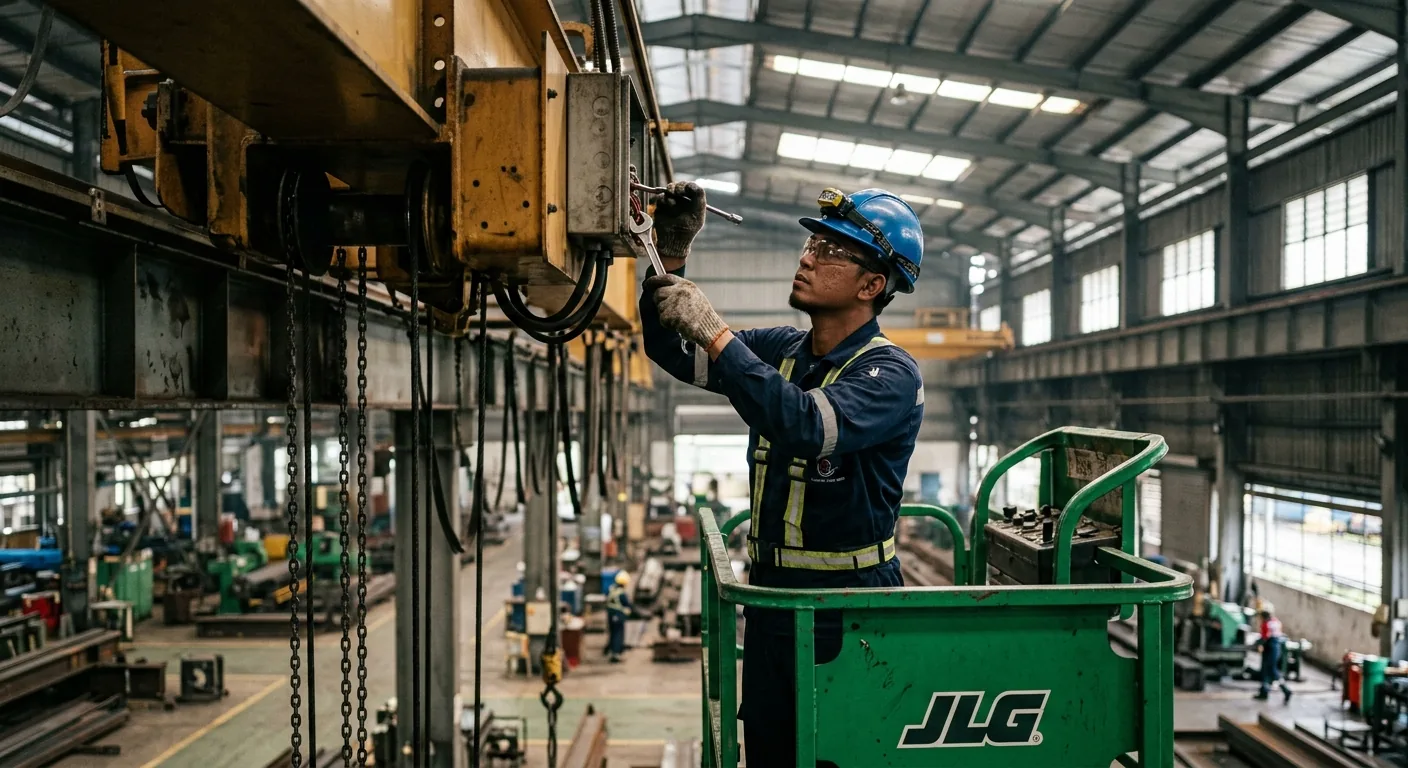
Measure door widths, entrance headroom and goods lift capacity if the machine needs to reach an upper floor. A large diesel unit needs a wider path and a bigger truck for delivery.
Weather and Working Hours
Outdoor work in Malaysia is often interrupted by afternoon rain. Diesel units cope better with wet ground, but all work at height must stop in strong wind or thunderstorms, whatever the engine type.
Operator Skill
Larger diesel units call for more careful handling, especially when travelling on slopes. If your team has limited experience, a trained operator is available from RM150 per day. See our guide to operators and site preparation.
Frequently Asked Questions
How long does an electric unit's battery last?
For most jobs, a fully charged battery covers a normal shift. Make sure there is a power socket nearby to recharge overnight if the rental runs longer than one day.
Can a diesel unit be used in a multi-storey car park?
It depends on the height limit, floor load limit and ventilation. Most multi-storey car parks are better suited to electric units. Send us photos of the location for confirmation.
Do both types carry the same certification?
Yes. All our units, electric or diesel, carry a valid JKKP/DOSH PMA certificate and are insured.
Still unsure which type fits? Browse every unit on our homepage, or ask our team for a recommendation based on your site.
WhatsApp us with photos of your site and a rough working height, and we will recommend either an electric or diesel unit along with a quote.
Need a scissor lift for your project?
WhatsApp us the job type, height and location — get a quote within 15 minutes.
Get a Quote