Scissor Lift vs Boom Lift: The Differences and When to Use Each
Scissor lifts and boom lifts both carry workers to height, but they move in very different ways. Choosing the wrong one can mean the platform cannot reach the work point, or that you pay for capability you never use.
In this article we explain the key differences between a scissor lift and a boom lift, when each one fits best and how to decide based on your site conditions.
How Each Machine Works
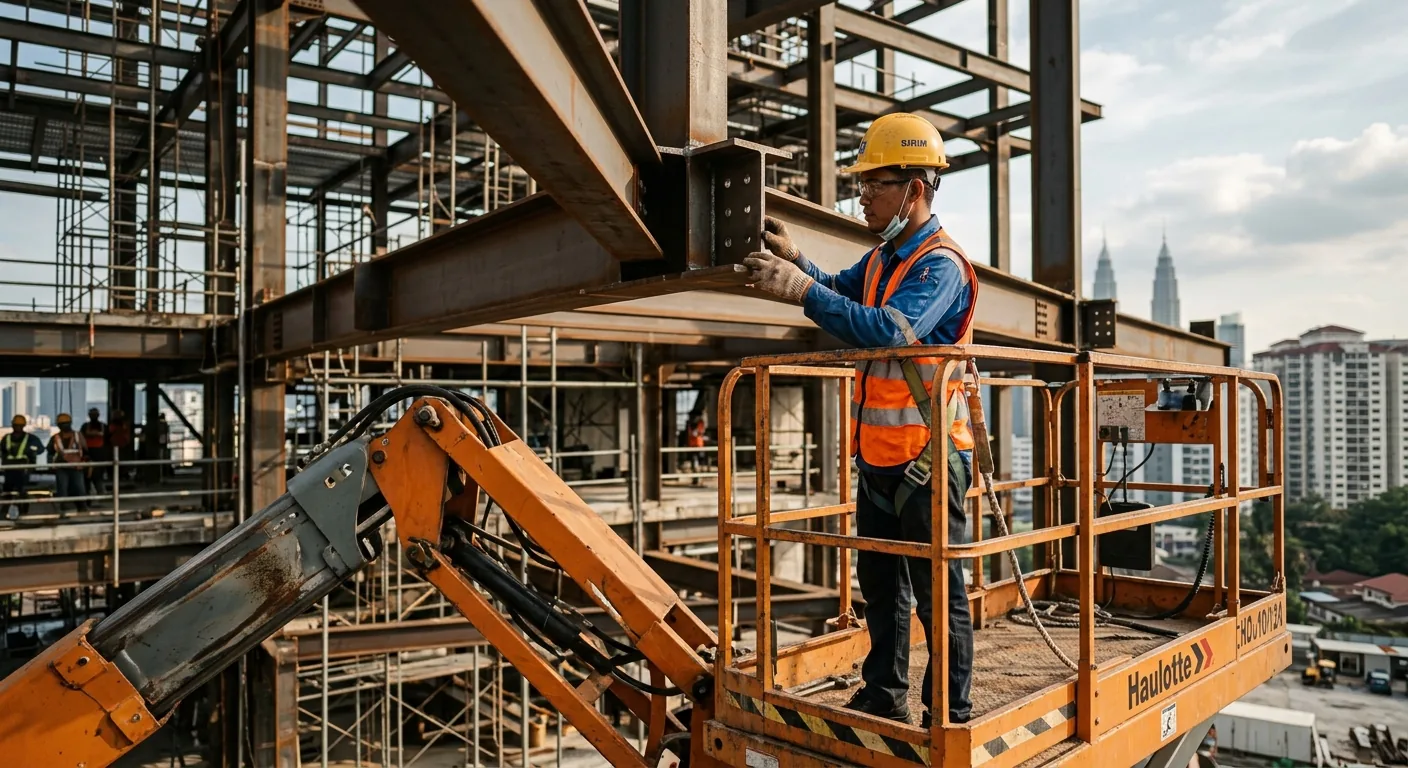
A scissor lift uses criss-crossed supports that extend like scissors to raise the platform vertically. The platform stays directly above the machine's base at all times.
A boom lift has a long arm that can extend and articulate. The basket at the end can move up, sideways and over obstacles to reach points that cannot be approached directly.
Summary of Differences
- Direction of movement: scissor lifts go vertically only; boom lifts go vertically and horizontally.
- Platform size: scissor lifts have a wider platform for several workers and materials.
- Stability: scissor lifts are more stable because the load sits directly over the base.
- Reach: boom lifts can reach points above obstacles or beyond the edge of a building.
Advantages of a Scissor Lift
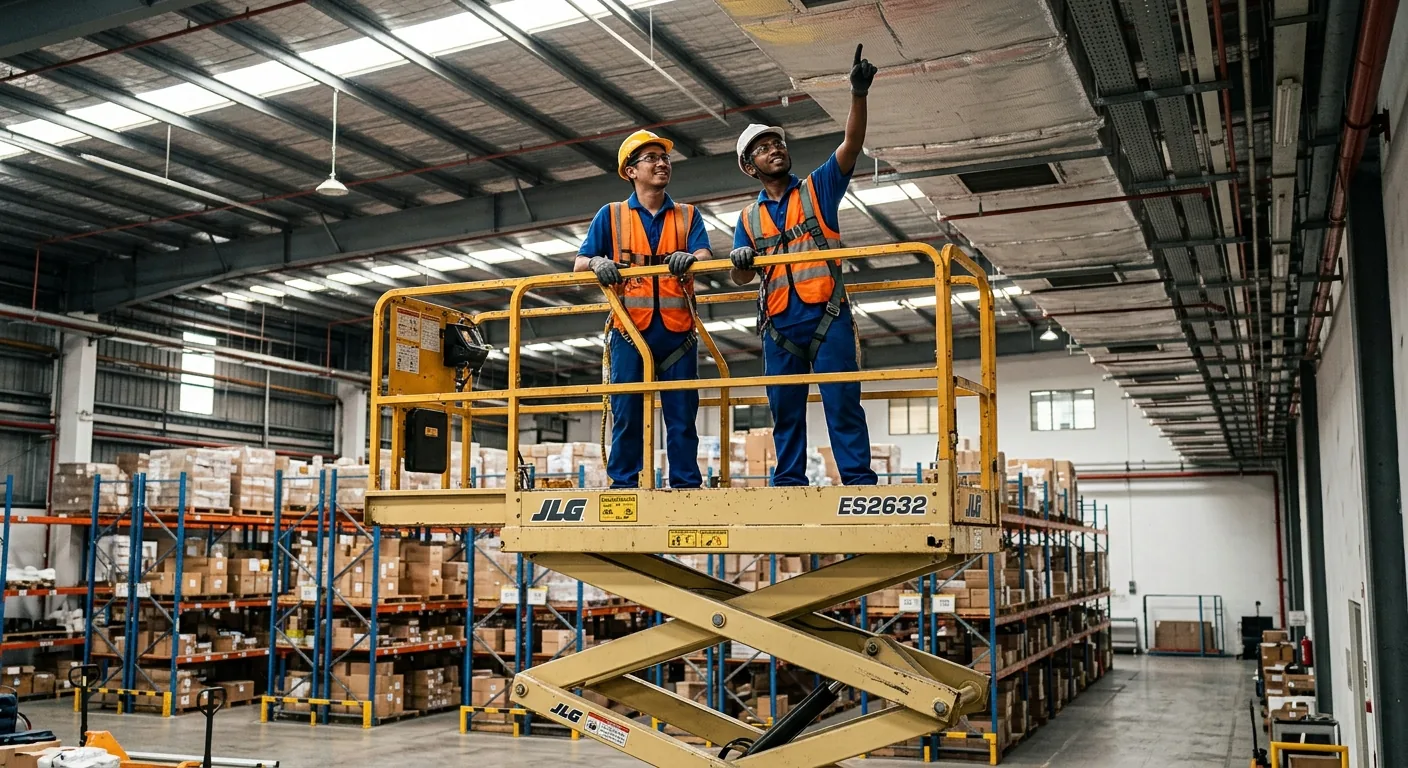
For most indoor jobs, a scissor lift is the more practical choice. The wide platform lets two or more workers operate together with their tools and materials.
Wide Platform and High Load
Our units carry from 230 kg on the Mini Electric up to 450 kg on the Heavy Duty Diesel. That suits jobs such as fitting ceiling panels, lights, air-conditioning ducts and large signage.
Compact and Easy to Control
Scissor lifts, especially Mini units, are small enough to pass through standard doors and move along warehouse aisles. They can be driven directly from the platform, which speeds up long runs of ceiling work.
Lower Rental Cost
Scissor lift rental starts from RM300 per day for a Mini unit. For straightforward vertical work it is usually far more economical. See the full table in scissor lift rental price 2026.
When a Boom Lift Fits Better
A boom lift excels when the work point cannot be approached from below. Examples include work above large machinery in a factory, over a swimming pool, or on a building facade with landscaping or a low roof beneath it.
Boom lifts are also useful for very high work where the machine's footprint is limited. However, the basket is smaller and usually fits only one or two workers with light tools.
How to Decide
Answer these three simple questions to find the right machine:
- Can the machine sit directly below the work point? If yes, a scissor lift is usually the best choice.
- How many workers and how much material need to go up? A wide platform favours a scissor lift.
- Is there an obstacle between the floor and the work point? If yes, consider a boom lift.
Once you have chosen a scissor lift, the next step is height. Our guide on how to choose scissor lift height explains how to measure accurately.
Project Examples and the Right Machine
- Installing lights on a flat warehouse ceiling: Mini or Standard Electric scissor lift.
- Painting an exhibition hall ceiling: Standard Electric scissor lift.
- Steel beam work on an open construction site: Heavy Duty Diesel scissor lift.
- Cleaning glass above a canopy roof: boom lift, because of the obstacle below.
For warehouse work specifically, read scissor lifts for warehouses, which covers racking aisles and floors.
Cost and Rental Period Considerations
Beyond what the machine can do, total project cost also depends on the rental period and how fast the work goes. A machine that is cheaper per day but slows the job down can end up costing more.
Working Speed on the Platform
A scissor lift's wide platform lets workers take all their materials up in one trip. For repetitive work along a ceiling, such as fitting a row of lights, this can shorten the project noticeably compared with a small boom lift basket.
Choose the Right Rental Period
For projects longer than a week, weekly rates are usually 15–20% cheaper than daily rates, and monthly rates can save up to 30–40%. Compare the options in our guide to daily, weekly or monthly rental.
Trained Operators
If your team is not used to handling machines at height, a trained operator is available from RM150 per day. That lowers risk and speeds up the work from day one.
Differences in Safety
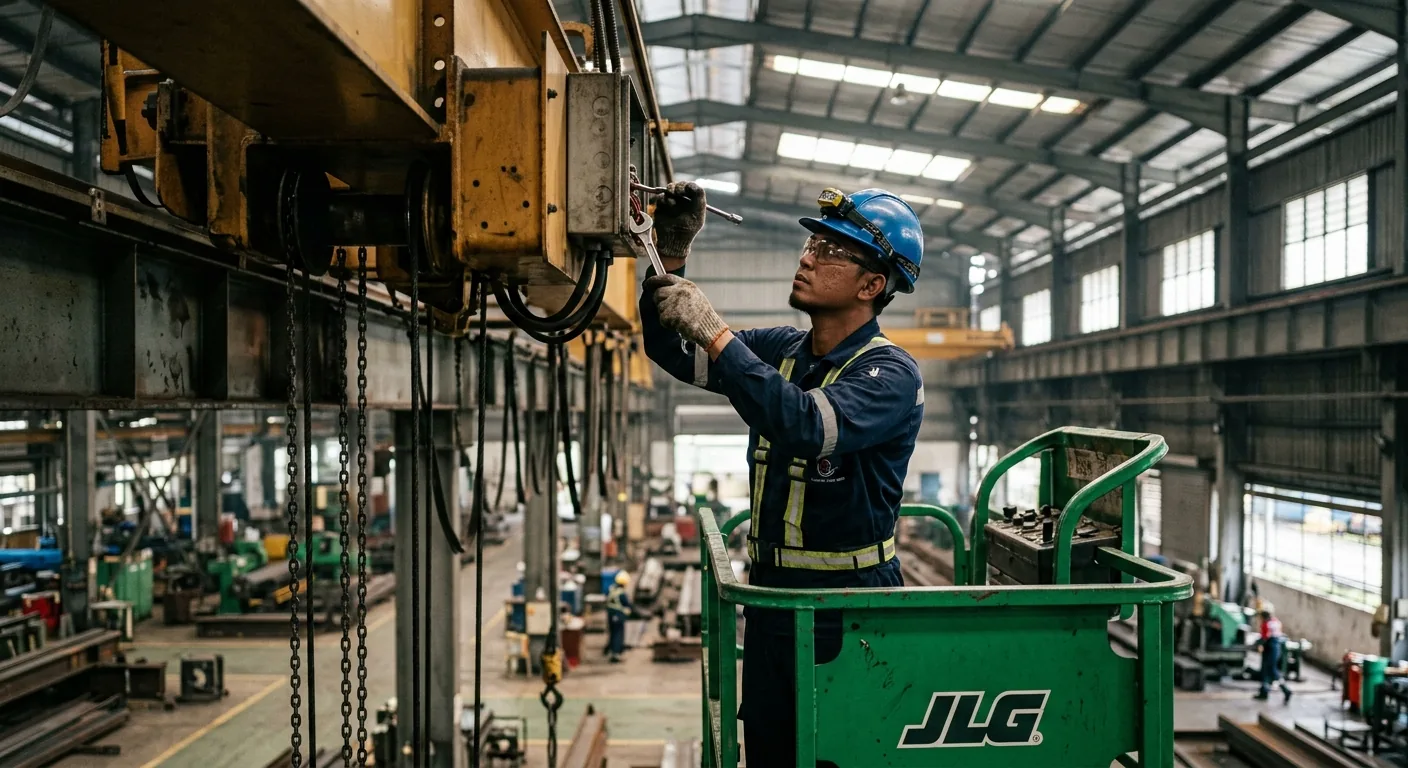
Both machines need training and daily inspections. A scissor lift has guardrails around the platform for fall protection, while a boom lift usually requires a safety harness clipped to an anchor point in the basket.
All our scissor lifts carry a valid JKKP/DOSH PMA certificate and are insured. Before operating, use our scissor lift safety checklist to make sure the machine and site are in good order.
Frequently Asked Questions
Which is more stable, a scissor lift or a boom lift?
A scissor lift is generally more stable because its platform sits directly over the base. Both are safe, though, when used within their load limits and on suitable ground.
Can a scissor lift be used outdoors?
Yes. Rough-terrain diesel units with four-wheel drive are built specifically for uneven ground and outdoor work at 8 to 18 metres.
I am not sure which machine I need. What should I do?
Take photos of the work point from floor level and measure the approximate height. With that information our team can judge whether a scissor lift suits your job.
See all our scissor lift units on the homepage.
WhatsApp us with photos of your site and a short description of the job, and we will confirm whether a scissor lift fits along with a quote.
Need a scissor lift for your project?
WhatsApp us the job type, height and location — get a quote within 15 minutes.
Get a Quote